Saturday, February 24, 2007

Reforming School Aid Formula Will Wait Yet Another Year


More than half of New Jersey’s property taxes are used to finance public schools. For the past seven months, Governor Corzine and the State Legislature have attempted to reform the school aid formula that determines the amount of State funding each school district receives. For many years, the aid has disproportionately gone to underperforming urban school districts while suburban and rural districts receive little in the way of funding. Unfortunately, because of political wrangling, plans to implement a new school aid formula for the upcoming fiscal year have been scrapped. Instead, hundreds of millions of dollars in Governor Corzine’s upcoming budget proposal will be pledged to boost state aid to our school districts. While increased funding is a welcome change, meaningful property tax reform will never occur unless our legislators are willing to tackle the unfair school assistance program.

Currently, the formula rewards urban districts at the expense of suburban and rural areas whose residents are forced to pay an ever-increasing share of property taxes to finance their public schools. Meanwhile, urban residents have their public schools partially, if not primarily, funded by the rest of the residents of the State of New Jersey.

While urban schools undoubtedly need more help from the State than suburban and rural districts, the waste, fraud and abuse occurring in many urban school districts and governments must be seriously tackled. Millions of dollars are being misplaced, money that could be used to offset property tax hikes in suburban and rural districts. School bureaucracies have expanded in urban districts and they must be curtailed. Funds should be spent on instruction for students, not top-heavy, high-salaried administrators who rarely step inside a classroom.

Of course, serious reform of the school funding formula will mean that urban districts will face greater scrutiny and may lose some aid. This does not sit well with the legislators who represent these districts, where powerful and significant blocks of votes in the State Legislature are cast.

However, with the possible retirements/defeats of several key urban legislators from Essex and Hudson counties, hopefully these “lame duck” legislators will, during their remaining time, look out for the best interests of all residents of the State of New Jersey and not simply their own particular constituencies. If they do realize that they represent all of the people of the State of New Jersey and not only the people who live in their districts, they may do the right thing by using their power to reform the school funding formula, for the betterment of all State residents. In addition, two groups that advocate for a new school-funding formula announced this past week that they would merge to create one powerful organization representing 150 school districts. The new organization will likely be able to make inroads with legislators from “swing” districts, enabling a more equitable school funding formula to become a reality.

Michael M. Shapiro, Publisher and Managing Editor of ShapTalk.com, graduated from Rutgers College and Stanford Law School. Mike currently serves as the Chairman of the New Providence Democratic Party and Editor of The Alternative Press. Contact Mike at mike@shaptalk.com

Corzine's Social Welfare Vision

Murray Sabrin

Governor Corzine’s second budget address last Thursday calling for more social welfare spending was as predictable as the chilly winds sweeping across the Statehouse in late February. The Governor presented his 2008 $33.3 billion budget, which is 7.2% greater than the current year’s outlay, to the Legislature claiming it is fiscally prudent. Although social welfare spending increases modestly, Corzine stated, “Reflecting fiscal realities, this budget regrettably has few new initiatives…” He also asserted that the budget proposal he will send to the Legislature, “is a very good budget for the people of New Jersey.”

Governor Corzine stated that the 2008 budget contains no new taxes or increases for the first time in six years. He also proposed increasing the income limit for families receiving the Earned Income Tax Credit. The EITC was established by the federal government in 1975, and is essentially a negative income tax. Low-income families not only get back income taxes they paid, they also get a refund of their Social Security taxes. In addition,
they also get a check from the government. In effect, a welfare payment. Corzine wants to expand this program statewide, increasing the amount of state tax dollars that will be redistributed from both middle and upper-income families to low-income families.

The crowning achievement of the 2008 budget, according to Governor Corzine, is the more than $1.8 billion in property tax relief and additional aid to schools and local governments. In other words, state taxes are collected by Trenton in order to be sent back to the people who paid them in the first place, and to pay for local government schools and other services. This is government at its worst.

Governor Corzine pointed out that “almost 50 cents of every dollar in this $33 billion budget goes to property tax relief. That’s a total of $16.6 billion.” The state budget could be reduced by 50% if local governments and schools had to raise the funds they needed to operate. But that would eliminate Trenton’s control and power over the people of New Jersey and their local elected officials. The political elite in Trenton would then not have the resources to redistribute money from the suburbs to the cities run by their political allies.

To collect state taxes a tax collection agency is needed that does not provide any valuable service to the people. Then the state needs agencies to funnel the state tax dollars back to local schools and municipalities. The state collection and distribution agencies do not provide any valuable service to the people. In short, they are “deadweight” on the economy. If they were closed and the monies now collected by the income tax, sales tax and other levies stayed in people’s pockets, the people would have the funds to pay for local services.

Instead, the Legislature has created such programs as healthcare for seniors and low income children and their parents, if they qualify. The courts have mandated school spending for urban and suburban low-income districts and social welfare spending to bolster children’s’ services, as well as affordable housing programs.

The bottom line is that state government has become a social service provider, a healthcare insurer, a low-income housing developer, a builder of schools, a day care provider, an education spender, and an R&D underwriter. And the governor wants universal preschool and full day kindergarten!

Is it any wonder that the state is broke? Or will stay broke until we do things differently in Trenton?

Governor Corzine, at the end of his budget address, stated, “I think it’s time for a new paradigm for the state’s fiscal future.” But throughout his address, Corzine called for expanding state spending on social welfare programs and perpetuating the redistribution of income.

The new paradigm we need-- freedom and liberty—will not be embraced by the political elite in Trenton, because limited government requires human action (social power), individual, family and community actions to deal with people’s needs. The current paradigm is Trenton is: “we are from the government and we are here to help you.” And the costs keep rising and rising. With no end in sight.

In the final analysis, it is about social power versus political power. It is about the people versus the political elite. The sooner the people realize that the moneys that Trenton sends back to them came out of their pockets in the first place and demand ending the social democracy paradigm that will bankrupt us in the not-too-distant future, the sooner we will be on the road to economic recovery and solvency.


Murray Sabrin, Ph.D., is professor of finance in the Anisfield School of Business, Ramapo College of New Jersey, where he is executive director of the Center for Business and Public Policy (www.ramapo.edu/cbpp.)

Saturday, February 17, 2007

Questions No One Asks

Murray Sabrin

When public policy questions are “debated” in New Jersey or in any other state and in Washington D.C., the rhetoric on either side of the aisle in the legislature or Congress tends to focus on the cost of new or existing program. Virtually no one in the legislature or Congress even asks the most fundamental question: Is this expenditure authorized by the constitution? If not, is this program a worthwhile expenditure of taxpayers’ money? If the first question was asked, members of Congress would be hard pressed to find constitutional authority for scores of programs that have been routinely funded for decades.

According to Article I, Section 8 of the United States Constitution, numerous federal government activities are authorized—coin money, establish post road, raise an army and navy, declare war, etc.-- none of which include healthcare, retirement income, education, housing, agricultural subsidies, corporate subsidies, research and development subsidies, minimum wages, foreign aid, nation building, etc, etc., etc. In short, the U.S. Constitution limits the activities of the federal government to a few modest programs so the people can exercise their freedoms to live in a society based on liberty.

The clause in Article I, Section 8 that big government types hang their hats on is in the introduction.


Section 8. The Congress shall have power to lay and collect taxes, duties, imposts and excises, to pay the debts and provide for the common defense and general welfare of the United States; but all duties, imposts and excises shall be uniform throughout the United States… (Emphasis added)

The introductory clause to Section 8 has been the rationale for the statists who have successfully expanded the role of the federal government into every activity of our society since the creation of the Republic. Note, the general welfare clause does not mean that the federal government will literally provide for every citizen’s welfare. That would be financially impossible. Nevertheless, the statists are still bemoaning the fact that the federal government does not do enough for the people. In fact, the federal government does virtually everything for the people except wipe their noses.

In addition, Section 8 also includes the following: “To regulate commerce with foreign nations, and among the several states, and with the Indian tribes.” This phrase also has provided justification for the interventionists to support and pass thousands of laws to increase the federal government’s control over the economy. If one accepts the literal interpretation of the above clause, then there is absolutely no economic activity that is off limits to federal government.

Besides, even if the constitution does justify intervention, it does not work. In other words, are government bureaucrats and planners wiser and smarter than the people in general, known as the market? If you say yes, then you support the ideas and beliefs of such compasssiaonte individuals as Mussolini, Lenin, Stalin, Mao, Khrushchev, Castro, Kim Il Jung, and of course everyone’s favorite villain, Hitler. All these individuals were collectivists who hated liberty and free enterprise. And they ruined their respective nations, killing tens of millions and creating untold human misery and devastation, because they believed and believe that the state is god, providing the people’s needs.

The modern crop of collectivists is composed of self proclaimed—and self righteous --compassionate individuals from both the Democrats and Republicans who claim they are expressing the “will” of the people. And they may be right. After decades of collectivist ideology in the schools, the media, pop culture, etc., big government ideas are now considered the norm by well meaning (let’s give many of them the benefit of the doubt) but misguided politicians and the public.

In New Jersey and other states, other questions besides the obvious one (Where is the constitutional authority for this program?) have to be asked: Who is responsible for your life? Who is responsible for the well being of your children? If you answer, me and me and my spouse, go to the head of the class. Instead, the politicians claim there has to be a government program for families who do not have health insurance, who need preschool, affordable housing, etc. In other words, individuals are having children and are unable to provide for their basic needs.

So in America today, you can have children without taking responsibility for your actions, because the government is supposed to have a program to meet your basic needs. And if you do not have children, you have to pay for the needs of other people’s children. The New Jersey State income tax, which is dedicated to public school aid, and school property taxes punish couples as well as single individuals who have made a decision not to have children. In short, the tax system punishes people for their choices. But don’t we live in a society that is “pro-choice”? A society that celebrates the freedom to choose in many areas. However, in American people are punished (taxed) for making rational choices so they can lead their lives according to their values. This is a gross injustice.

There are literally dozens of other examples that highlight the morass we find ourselves in, namely, expecting people to pay for other people’s needs. The only moral acceptable way to create a compassionate society is to have a vibrant marketplace that provides the goods and services people want, and a widespread nonprofit sector—the social sector—to help people who need assistance for their needs so they can become financially independent, or close to it. Financial independence should be the goal of every adult in America. And it is up to everyone to work for that goal, for themselves, and, if they can, for their neighbors.

Murray Sabrin, Ph.D., is professor of finance in the Anisfield School of Business, Ramapo College of New Jersey, where he is executive director of the Center for Business and Public Policy.

Thursday, February 15, 2007

Has the Governor Gone Too Far?


For the past decade, New Jersey 's Governors have slowly but steadily politicized the State's system of higher education, from appointing "cronies" to serve on the Board of UMDNJ to "finding" jobs in New Jersey Higher Education for fellow politicians. Governor Corzine’s intervention in the union organizing drive underway at Rutgers is as troubling. For the State’s chief executive to get so intricately involved in the day-to-day management of the State University is quite unusual in and of itself, but for the Governor to actively promote this unionizing effort and go so far as to join the union's organizing rally is unacceptable. By exerting political pressure and influence on the President of Rutgers University, Richard McCormick, the Governor has also secured a “neutrality” agreement that prohibits the University from taking a position on the possible unionization and allows employees to promote unionization during work hours. Has the Governor gone too far?

While I come from a family of public school teachers and am generally supportive of unions and public employees, the demands of unions should not go unquestioned and certainly should not be given the stamp of approval by the Governor of the State before a thoughtful dialogue takes place. One of the union’s demands—the elimination of merit pay—could seriously undermine efforts underway at Rutgers to improve the delivery of services throughout the University’s administrative staff. If the union achieves its goal, the University's employees, most of whom work in the University’s notoriously dysfunctional bureaucracy, may no longer have an incentive to deliver quality customer service to students. This is but one of many issues that are deserving of debate.

Under Governor Corzine's leadership and that of his recent predecessors, the State has slashed funding for Rutgers, causing deep cuts in services and course offerings and significant tuition increases. Should the nonunionized employees at Rutgers be successful in their attempt to unionize, the newly unionized employees will likely receive salary increases and improved benefits. The Governor's full-fledged support for union organizing at Rutgers is akin to an unfunded mandate that will have to be paid for either through deeper cuts in services, tuition hikes at Rutgers, and/or tax increases for New Jersey residents.

Governor Corzine's active involvement in union organizing at Rutgers is just the latest example of his inexplicable affinity for placing the concerns of unions ahead of the interests of the great majority of New Jersey residents. The Governor of the State of New Jersey ideally represents all of our residents in the State's collective best interest. Governor Corzine seems to have forgotten this and instead has become a cheerleader-in-chief for union organizers to the detriment of Rutgers University and the residents of the State of New Jersey.

Michael M. Shapiro, Publisher and Managing Editor of ShapTalk.com, graduated from Rutgers College and Stanford Law School. Mike currently serves as the Chairman of the New Providence Democratic Party and Editor of The Alternative Press. Contact Mike at mike@shaptalk.com

Saturday, February 10, 2007

Declaring Our Independence...Again

Murray Sabrin

One of the greatest achievements of the human race was the Declaration of Independence. The Declaration stated unequivocally that government is created to protect the rights of the individual.

We hold these truths to be self-evident, that all men are created equal, that they are endowed by their Creator with certain unalienable Rights, that among these are Life, Liberty and the pursuit of Happiness. — That to secure these rights, Governments are instituted among Men, deriving their just powers from the consent of the governed, — That whenever any Form of Government becomes destructive of these ends, it is the Right of the People to alter or to abolish it, and to institute new Government,…

These words ignited the American Revolution and the eventual establishment of a new nation of independent states in order for the American people to take their rightful place in society, free individuals pursuing their dreams, their hopes, their values.

That was the promise, the ideology, of the American Revolution---liberty, limited government and free enterprise.

How far we have come from 1776! Today, the prevailing ideology in Washington DC and Trenton and all the other state capitals is statism—the belief that the state should “take from one group in order to give to another. The more it can take the more it can give. It is to the interest of those whom the government wishes to favor that their state become as large as possible.” (Ludwig von Mises, Omnipotent Government)

In short, too many Americans have embraced what the political elites have been selling to them in election after election for decades, dependence on the state for their basic needs—education, housing, medical care, social security, etc.

Three decades ago, Murray Rothbard speaking at the Libertarian Party convention correctly diagnosed the issues facing America.

The difference between us and the Democrats and Republicans is not that we are so much smarter than they are, but that we are deeply concerned with ideas, with principles, whereas they are simply concerned with getting their places at the public trough. We are interested in principles, they in power; and, gloriously enough, our principle is that their power be dismantled.

Too many libertarians have absorbed the negative and elitist conservative worldview to the effect that our enemy today is the poor, who are robbing the rich; the blacks, who are robbing the whites; or the masses, who are robbing heroes and businessmen. In fact, it is the state that is robbing all classes, rich and poor, black and white, worker and businessman alike; it is the state that is ripping us all off; it is the state that is the common enemy of mankind. And who is the state? It is any group who manages to seize control of the state's coercive machinery of theft and privilege. Of course these ruling groups have differed in composition through history, from kings and nobles to privileged merchants to Communist parties to the Trilateral Commission.

On these pages we will expose the statists of both political parties and what they are doing to what is left of the American people’s liberties. The clock is ticking. Given who are the leading contenders for the presidency in 2008, we should be worried, very worried.

Our goal in the next several years must be nothing less than declaring our independence again. Nothing less will save American from a complete statist takeover of our society.

Murray Sabrin, Ph.D., is professor of finance in the Anisfield School of Business, Ramapo College of New Jersey, where he is executive director of the Center for Business and Public Policy.

Friday, February 9, 2007

Welcome Professor Murray Sabrin!


ShapTalk.com is pleased to welcome Dr. Murray Sabrin, professor of finance in the Anisfield School of Business at Ramapo College of New Jersey, as a contributor to ShapTalk.com. Professor Sabrin serves as the executive director of the Center for Business and Public Policy.

Dr. Sabrin was the 1997 Libertarian Party gubernatorial candidate in New Jersey, and the first third party candidate to receive matching funds and participate in the official debates. He received more than 114,000 votes, approximately five percent of the turnout. In January 1999 he rejoined the Republican Party and formed an exploratory committee to seek the U.S. Senate seat being vacated by Frank Lautenberg. In the June 2000 primary, he received nearly 13% of the vote in a field of four candidates.

Thursday, February 8, 2007

Democracy Flourishes In The Sunshine


Governing bodies throughout New Jersey, particularly on the municipal level, are abusing The Open Public Meetings Act (OPMA) and the Open Public Records Act (OPRA). The purpose of these Acts is to enhance democracy by allowing the public to see government in action rather than permitting the government to operate behind closed doors. While some municipalities televise their meetings or otherwise record them, many do neither so there is no true record of what occurs at most public sessions. In addition, while minutes of these meetings are public documents under the law and must be available to its citizens, there is no requirement that the minutes be thorough or that they accurately reflect the meeting they are supposed to memorialize. Too often a citizen who requests documents, including resolutions and ordinances, is routinely given the runaround until he rescinds his request. In addition, there are few vehicles for the public to use when an OPRA request is denied by a governing body. Fortunately, change may be in the air.

Senators Robert Martin, a Republican, and Ellen Karcher, a Democrat, have proposed S1219 in the New Jersey State Senate, while Democrats Upendra Chivukula and Reed Gusciora are sponsoring A2762 in the State Assembly. These bills will modernize OPRA and OPMA and allow the sun to finally shine at all levels of New Jersey government. The bills will help restore the citizen’s trust in the political process.

Under the proposed legislation, all public bodies will be required to record both their private and open meetings. Comprehensive minutes will be required and draft minutes and the audio recordings must be made available to the public within five business days. Governing bodies will need to make readily available over the Internet meeting notices, agendas, minutes, resolutions, and ordinances. All non-emergency meetings of public bodies will allow for public comment and before any body takes final action on an item, each citizen who wishes to comment will have up to three minutes to do so.

There are also many new vehicles for citizens to use to enforce OPRA and OPMA under the proposed legislation. The burden will be on the governmental agency to prove compliance with OPRA and OPMA. People who “substantially violate” either Act, including public officials and attorneys, will be personally liable for monetary penalties of up to $5,000, which cannot be paid for with taxpayer money. Finally, members of the public will be able to recover attorney fees from a public body if they prevail.

The residents of New Jersey and our politicians throughout the State should embrace the proposed legislation. Senators Karcher and Martin and Assemblymen Chivukula and Gusciora are to be commended for acting in the public’s best interest. Their fellow Legislators should do likewise.

Michael M. Shapiro, Publisher and Managing Editor of ShapTalk.com, graduated from Rutgers College and Stanford Law School. Mike currently serves as the Chairman of the New Providence Democratic Party and Editor of The Alternative Press. Contact Mike at mike@shaptalk.com
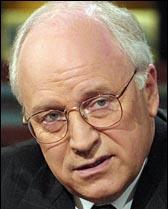
Friday, February 2, 2007

CHENEY: AN ABJECT FAILURE


As the Republican Party implodes over Iraq and Republican Senators are publicly expressing outrage over President Bush’s plan to increase by approximately 20,000 the number of American soldiers in Iraq, Vice-President Cheney has remained firmly behind the President. That’s not surprising since Vice-Presidents tend to be steadfast supporters of the Commander-in-Chief. What sets Cheney apart from the crowd is the degree to which he is intractable, arrogant and inflammatory. As a result, the Vice-President stands out as one of the most abject failures in recent political memory.

While even President Bush now admits that things have not gone as well as he had anticipated in Iraq and that his Administration made mistakes, the Vice-President recently said that any talk of mistakes or blunders made in Iraq on the part of the Administration was “hogwash.” He has refused to take any responsibility for the quagmire in which our troops have found themselves in Iraq and the myriad of mistakes made leading up to this point. Cheney simply denies reality. If we take the Vice-President’s words at face value that the Administration did not blunder in Iraq, who did?

Cheney has not just exhibited excessive stubbornness; he is also unnecessarily inflammatory. For example, rather than being respectful of the majority viewpoint being expressed in the Congress and by the American people regarding the troop buildup and at least attempting to be conciliatory, he said last week that even if a bi-partisan resolution were offered in the Congress opposing the troop increase and supported by a majority of the Congress, “It won’t stop us.” Never mind that clear majorities in the House and Senate are opposed to the troop buildup, that the key military officers have said the increase will not make a significant difference in Iraq, that the American people are against the surge by wide margins; none of that matters to Mr. Cheney. Rather than acknowledge that there is some validity in the opposing view, he denigrates the position and attacks the messengers as defeatists.

This past week, the Vice-President again displayed his characteristic arrogance. When asked about the Democratic presidential field, he dismissed all of them outright. Why? Simply because they are Democrats. For Mr. Cheney, if one is not of his political party, if one does not belong to the same social circle, if one simply disagrees with him, that person is automatically wrong and he is right.

The Vice-President’s mulish, arrogant, and incendiary ways have played a major role in this Administration and the war in Iraq. Both are miserable failures. So is Mr. Cheney.

Michael M. Shapiro, Publisher and Managing Editor of ShapTalk.com, graduated from Rutgers College and Stanford Law School. Mike currently serves as the Chairman of the New Providence Democratic Party and Editor of The Alternative Press Contact Mike at mike@shaptalk.com